
Battery module and pack assembly lines for stationary energy storage, engineered around electrical safety, weld integrity and cell-to-pack traceability.
We engineer lines that take qualified battery cells and build them into modules, packs and integrated systems. Cell manufacturing itself (electrode coating, calendering, winding or stacking, electrolyte filling and formation of the cell) is a different industry with different facility requirements, and sits outside this scope.
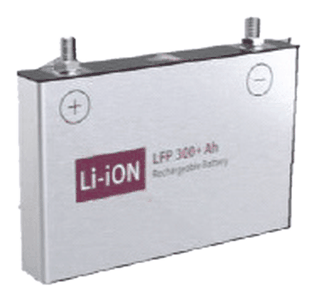
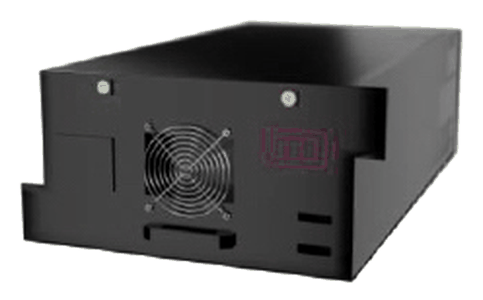
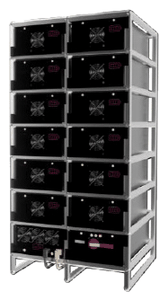
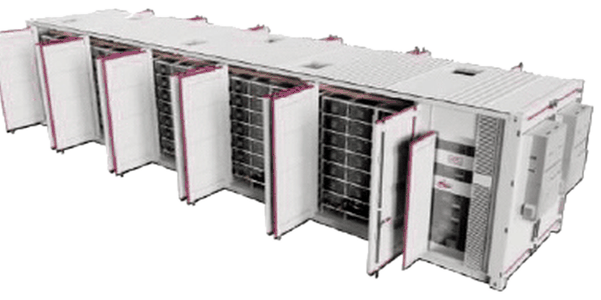
Cell manufacturing sits upstream of us. Our lines start where qualified cells arrive and finish at a tested, containerised system.
Cell inspection, electrical characterisation, grading and matching into consistent groups.
Stacking, bonding, laser busbar welding, weld verification and BMS sensing integration.
Enclosure, thermal management, leak testing, formation, capacity grading and EOL release.
From robot cell loading through to pack end-of-line test, with the welding, glueing and leak-test stations that decide whether the pack survives its warranted life.
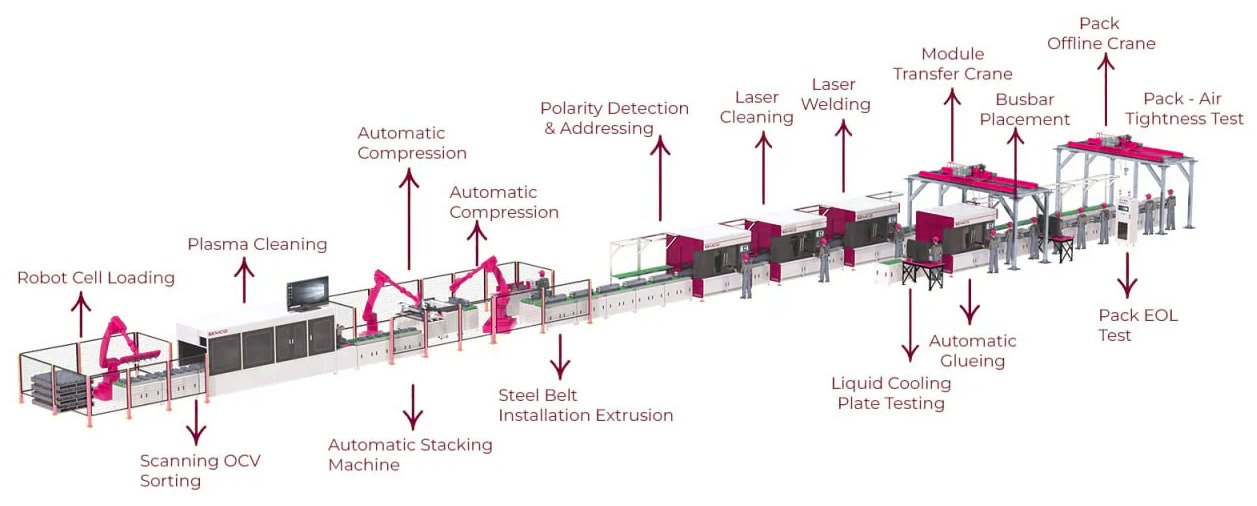
Scroll sideways to follow the full line
Battery assembly lines carry requirements that PV lines do not: gas detection, thermal runaway containment, dedicated fire strategy, electrically safe work zones for high-voltage pack handling, and controlled humidity in defined areas. These are engineered with the line and the building together, retrofitting them afterwards is expensive and often compromised.
Pack performance and lifetime are limited by the weakest cell in the series string, so grading accuracy at the front of the line propagates through every downstream metric.
A busbar weld that looks acceptable can still carry elevated resistance, and elevated resistance becomes a hot spot under load. Inline resistance measurement across every joint, measured per joint rather than sampled, is the only practical way to catch this before the module is closed up.
Grading is worthless if matched cells are separated during assembly. The line must enforce set integrity through code tracking at every transfer, which is an automation and MES design requirement rather than a procedural one.
Charge-discharge grading occupies the line far longer than any assembly station, so cycler count, rack footprint, power supply capability and heat rejection usually set both the building envelope and the electrical infrastructure. This is sized first during layout design, not last.
Storage systems are warranted for a decade or more and are subject to transport and safety regulation. Complete genealogy is a compliance requirement as much as a quality tool.
| Record | Captured at | Why it matters |
|---|---|---|
| Cell identity and supplier lot | Incoming registration | Enables containment to a specific cell lot if a defect pattern emerges |
| Grading values | Electrical characterisation | Demonstrates matched-set integrity and supports warranty analysis |
| Weld parameters and joint resistance | Laser welding and verification | Primary predictor of thermal hot spots in service |
| Torque records | Module and pack fastening | Electrical connection integrity under vibration and thermal cycling |
| Leak test result | Cooling circuit test | Coolant containment, a leak in service is a safety event |
| Formation curve | Capacity grading | Baseline for state-of-health tracking across the system's life |
| BMS configuration and firmware | BMS integration | Field diagnosis and update management |
| Shipping state of charge | SOC set | Transport regulation compliance evidence |
Tell us your cell format, module architecture and annual GWh target, and we will scope the assembly, test and formation capacity required.