
Advanced crystal growth technology for high-efficiency silicon ingot production.
Our low-oxygen monocrystalline crystal growth furnace produces premium-quality silicon ingots for next-generation photovoltaic applications. Using the proven Czochralski (CZ) crystal growth process within a carefully controlled inert atmosphere, the system delivers exceptional crystal quality, stable production and optimised oxygen concentration to meet the demanding requirements of modern n-type solar cell manufacturing.
Designed for industrial-scale production, the furnace combines intelligent automation, precision process control and energy-efficient thermal management to maximise productivity while maintaining outstanding crystal consistency.
Advanced thermal field engineering and optimised gas flow management minimise oxygen incorporation during crystal growth, helping manufacturers produce higher-quality monocrystalline silicon with improved electrical characteristics.
The complete crystal pulling cycle is automatically controlled: seed crystal positioning, neck formation, shoulder growth, constant diameter growth, tail growth and automatic process completion. Automation improves consistency while reducing operator intervention.
Intelligent closed-loop control continuously monitors crystal diameter throughout the pulling process, ensuring exceptional dimensional uniformity and reducing material waste. Typical accuracy is ≤ ±0.5 mm, depending on crystal size and process conditions.
Advanced temperature control algorithms combined with an optimised hot-zone design maintain highly stable thermal conditions across the entire growth cycle, giving stable melt temperature, uniform growth, improved crystal quality and repeatable results.
The modular platform allows flexible configuration for different crystal sizes and future production upgrades: simplified maintenance, straightforward capacity expansion, customisable software and integration with MES and smart factory systems.
Automation, optimised thermal efficiency and intelligent process control together reduce manual labour, material losses, energy consumption and production downtime, lowering overall manufacturing cost while improving production efficiency.
| Feature | Description |
|---|---|
| Crystal growth method | Czochralski (CZ) |
| Process atmosphere | Inert gas, argon or nitrogen |
| Crystal type | Monocrystalline silicon, n-type focus |
| Automation level | Fully automatic pulling cycle |
| Temperature control | Intelligent closed-loop control |
| Diameter control | High-precision automatic control, typically ≤ ±0.5 mm |
| Equipment design | Modular and expandable |
| Production mode | Continuous industrial operation |
| Factory integration | MES and smart factory system integration |
High-quality n-type monocrystalline silicon ingots for premium wafer production.
Material quality matched to tunnel oxide passivated contact process requirements.
Low-oxygen, high-lifetime material suited to heterojunction sensitivity.
Consistent bulk quality for the tighter demands of BC architectures.
Interstitial oxygen influences bulk lifetime and defect formation. For n-type material feeding TOPCon, HJT or BC lines, where cell efficiency depends heavily on bulk quality, controlling oxygen at the growth stage is far more effective than attempting to compensate downstream in cell processing.
The furnace is stage two of a thirteen-stage flow from raw silicon to sorted, inspected monocrystalline wafers.
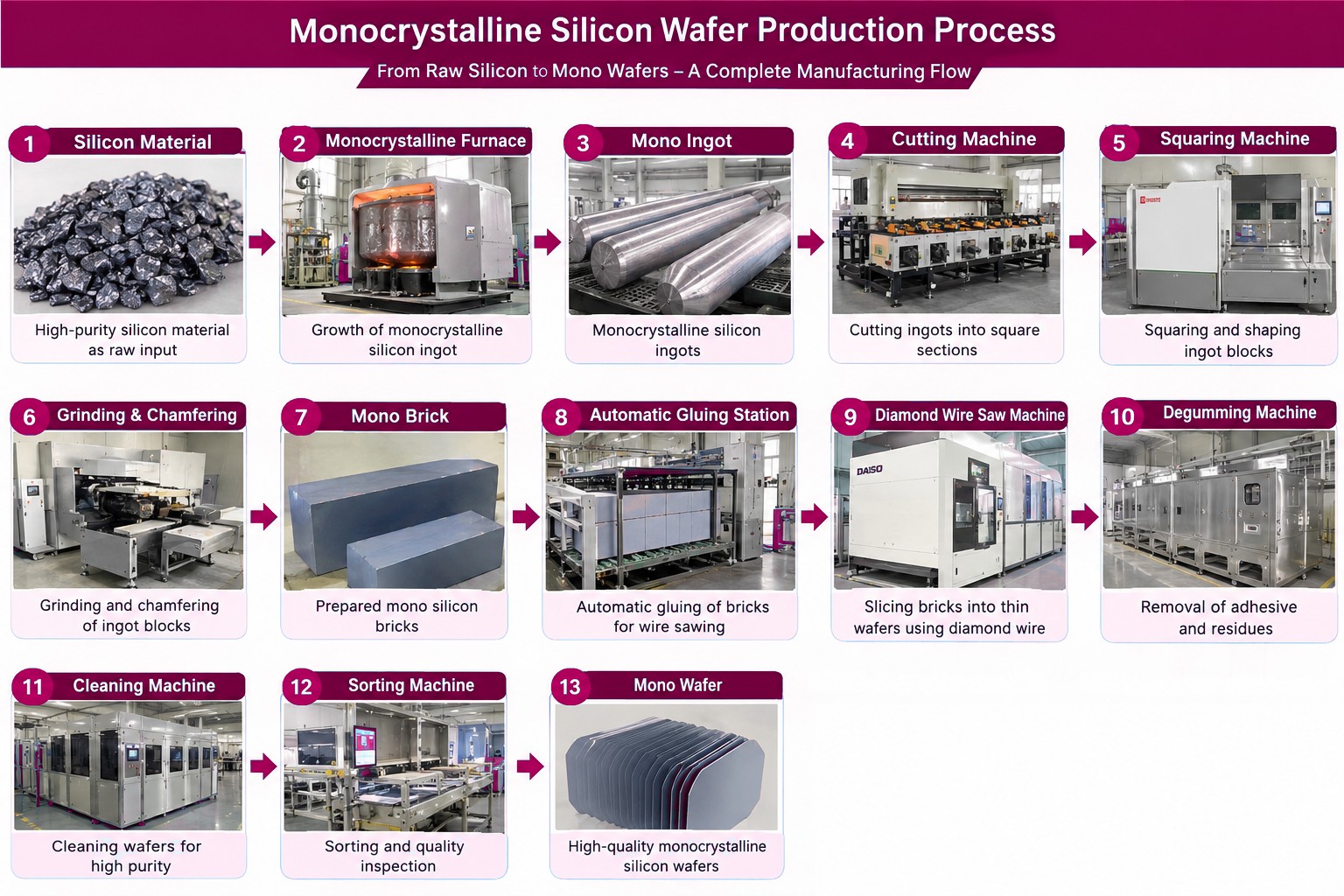
Our crystal growth systems are developed to support high-volume photovoltaic manufacturing with a focus on productivity, crystal quality and long-term operational reliability.
By combining intelligent automation with advanced thermal engineering, manufacturers achieve stable production, improved wafer quality and better efficiency for next-generation solar technologies.
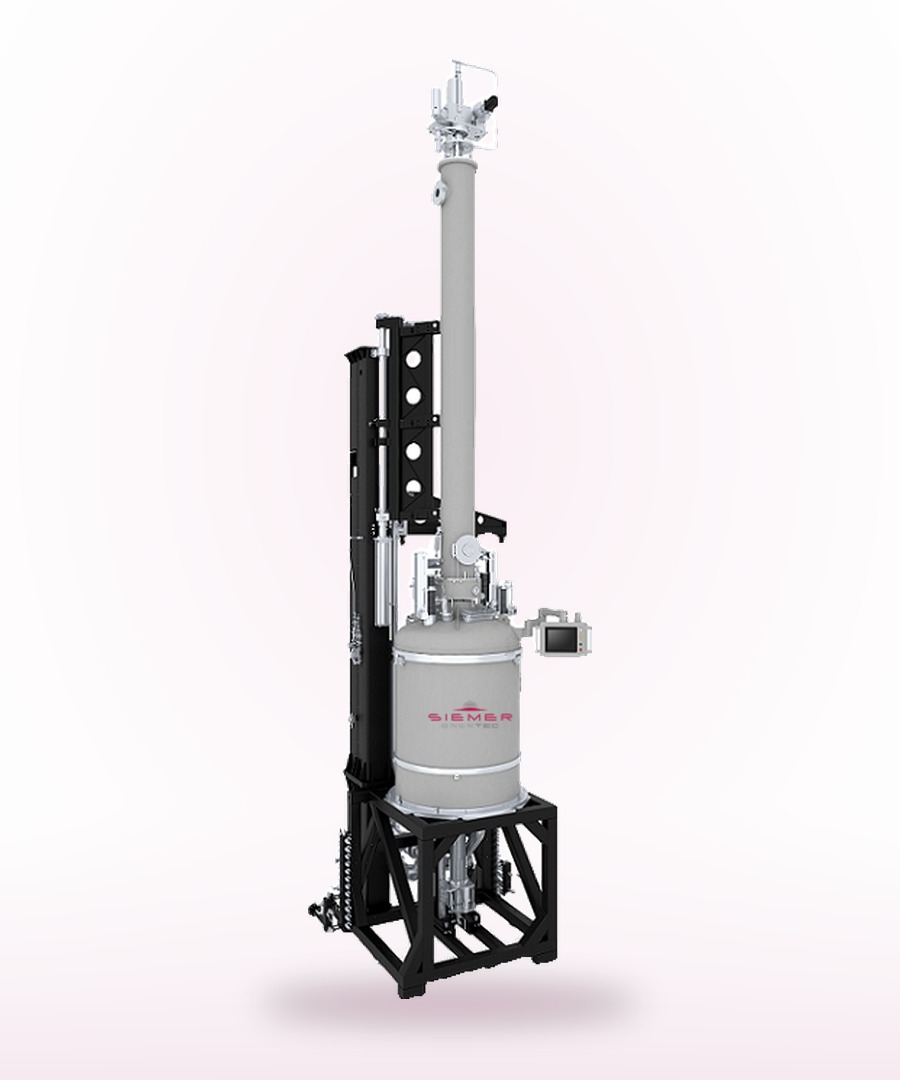
Tell us your target wafer output, resistivity specification and cell technology route, and we will configure the crystal growth section around it.